
Issi Rousseva, Architect
What is Mycelium?
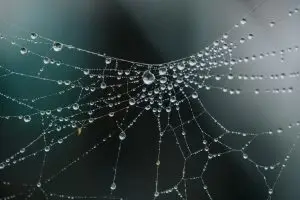
The word mycelium literally means “more than one”. It is actually a plural form of the word Mycelia. The word has New Latin and Greek origins and was first coined in text in the early 1800’s, and refers to the thread-like body of a fungus. Long before trees overtook the land, earth was covered by giant mushrooms. Researchers found that land plants had evolved on earth about 700million years ago and land fungi by about 1,300 million years ago. The largest living organism in the world today is a honey fungus measuring 2.4 miles (3.8km) across in the Blue Mountains in Oregon. Fungi live everywhere that moisture is present and play an important role in energy cycling within, and between, ecosystems. Fungi are found in terrestrial, marine and freshwater environments, and are part of a diverse community of “decomposers” that break down dead plants and animals. Mycelium is the vegetative part of a fungus, consisting of a network of fine white filaments (hyphae). In simple terms, it’s the fungus that mushrooms are made of, essentially, the term mycelium is used to refer to those thread-like structures of fungi. Mycelium (plural mycelia) develops from the fungal hyphae.
How Does Mycelium Form?
Mushrooms do not reproduce by seed or gather energy through photosynthesis like plants do. They reproduce by means of spores. These spores germinate to produce a mass of interwoven, single-cell wide structures known as hyphae. Collectively, masses of hyphae are known as the mycelium. These multicellular structures can grow into macro-size structures, which we most often recognise as mushrooms.

How does Mycelium Grow and How Can it’s Shape be Manipulated?
Fungus absorbs nutrients from its environment (substrate, log, etc.) through its mycelium, in a two-stage process. First, the hyphae secrete digestive enzymes into the decaying wood or other complex organic compound substrate. These enzymes break down biological polymers into smaller units such as monomers, creating new molecules (these molecules are now soluble nutrients, such as simple sugars, nitrates and phosphates). The mycelium then absorbs these monomers, using a combination of facilitated diffusion and active transport. This consumption of organic and synthetic waste causes it to grow- the shapes it grows into can be manipulated, as can its properties, through the different types of waste it is paired with.
As the mycelium grows, it begins to resemble a dense network of long, microscopic fibres that grow through the substrate. Once the mycelium has fully built its network, it transitions to the next stage; building a mushroom and this is where humans can intervene. The mycelium can be coaxed with supreme precision into complex structures so small, they’re invisible to the naked eye; this is done by manipulating and controlling the temperature, CO2, humidity and airflow- all of which influence the growth of tissue. This is a rapid process and the accumulation of fibres becomes a visible speck after a few hours and a visible sheet of material after a day or two.

What Potential does Mycelium have?
Biohm is a UK based company who work with Mycelium, as well as other alternative natural products, which they are currently testing for different markets. Biohm believe the fungi Mycelium is an extraordinary organism with significant untapped potential. They are currently working with over 300 different strains of mycelium to create sustainable alternatives to some of the construction industries most damaging materials. Biohm’s development behind Mycelium is through allowing nature to lead innovation in the construction industry, supporting cradle to cradle principles and the circular economy. Their range of products are completely natural, and can be considered as multi-tasking with a view to replacing current carbon-heavy materials in the construction industry. Mycelium is a great alternative for those due to its carbon-negative properties which are as a result of manipulation of naturally occurring biological processes. This could be a significant breakthrough in the global challenge of ridding the planet of synthetic waste.

Application of Mycelium and it’s Eco Credentials
Mycelium’s thermal, mechanical and physical properties are currently being explored, however Biohm have claimed they already know the material is capable of achieving higher insulation values than current premium alternatives and it has good mechanical and physical properties too. The following information is from Biohm’s product testing of mycelium. Applications of mycelium range from thermal insulation and acoustic panels to interior architecture applications and in product and furniture design (as are currently being explored by Biohm in the UK).

Properties and Benefits of Mycelium
Insulation performance
The material is capable of achieving higher insulation values than current premium alternatives and has promising structural integrity. The tests performed so far have been on Biohm’s bottom-of-the-line mycelium samples and produced values as low as 0.024 W(m*k), however their market ready premium product is expected to exceed the current thermal properties by 3-14 times.
Fire performance
Mycelium is naturally self-extinguishing when exposed to a fire and almost forms a complete fire barrier.
Moisture performance
Mycelium is capable of coping with any level of moisture or humidity due to its ability to naturally act like a wick, expelling excess moisture from itself (as long as it is not exposed to prolonged submersion). In addition, during the curing phase of production, the panels naturally get coated in a thick Mycelium skin, which acts as a barrier and allows the material to be even more water resistant.
Health and wellbeing
As a natural occurring material, Mycelium releases minimal, if any VOCs and as a breathable material, allows for air and moisture flow which can help minimise damp in buildings
Resource Efficiency
Biohm’s mycelium insulation is grown on agricultura or food waste (a critical waste stream in the UK with 10.2bn tonnes produced annually). It can be custom grown, avoiding the need for on-site trimming.
Recyclable & cold-compostable
At the end of its life, the material can be fed back into the production process, eliminating waste entirely. The material will also naturally decompose offering pH balanced nutrition to soils.
Existing Mycelium Projects
Mycelium has a wide range of applications and the following example projects from around the world illustrate this.
* Italian architect Carlo Ratti has grown a series of arched architectural structures from mushroom Mycelium.

* London-based designer Nir Meiri has created a series of table lamps using mushroom mycelium as an alternative to synthetic materials.

* Redhouse Architecture is looking at recycling derelict homes by demolishing them, combining the waste with mushroom mycelium and then using it to build new, biodegradable structures.

* The British furniture maker Sebastian Cox is the latest designer to work with mushroom mycelium. He has teamed up with researcher Ninela Ivanova to investigate the material’s potential in commercial furniture design, creating suede- like designs.

* A group of Indian and Italian architects have built a pavilion in southwest India using mushroom mycelium.

* Architect Dirk Hebel and engineer Philippe Block have started exploring with using fungi to build self-supporting structures. According to the duo, mycelium could provide the structure of a two-storey building, if it is designed with the right geometries.

* Dutch textile designer Aniela Hoitink has created a dress using disc-shaped pieces of mushroom mycelium, which she believes will “change the way we use textiles”.

* Dutch designer Eric Klarenbeek has 3D-printed a chair using living fungus, which then grows inside the structure to give it strength. The chair is the result of a collaboration between Klarenbeek and scientists at the University of Wageningen to develop a new way of printing with living organisms.

* New York studio The Living, created MoMA PS1’s gallery pavilion in 2014 – the structure was made up of a cluster of circular towers built from bricks that were grown from corn stalks and mycelium.

The Future of Mycelium
With the current global issues of global warming, deforestation and destruction of natural habitats, natural materials as alternatives to unsustainable, high-embodied-energy materials, could be the answer that everyone is looking for. A study recently published in the Proceedings of the National Academy of Sciences (PNAS) found that at least 88 percent of the Earth’s ocean surface is polluted with plastic debris. This is having a significant detrimental impact on our wildlife, particularly our marine species. However, according to Biohm and scientists at Kew Gardens in London, not only can fungi be used to create sustainable building materials, it can also be used to break down waste plastic, helping to clear the deluge of mass-produced plastic waste covering the earth and affecting already-fragile habitats. This alone illustrates mycelium’s huge potential as a commercialised, mainstream material.
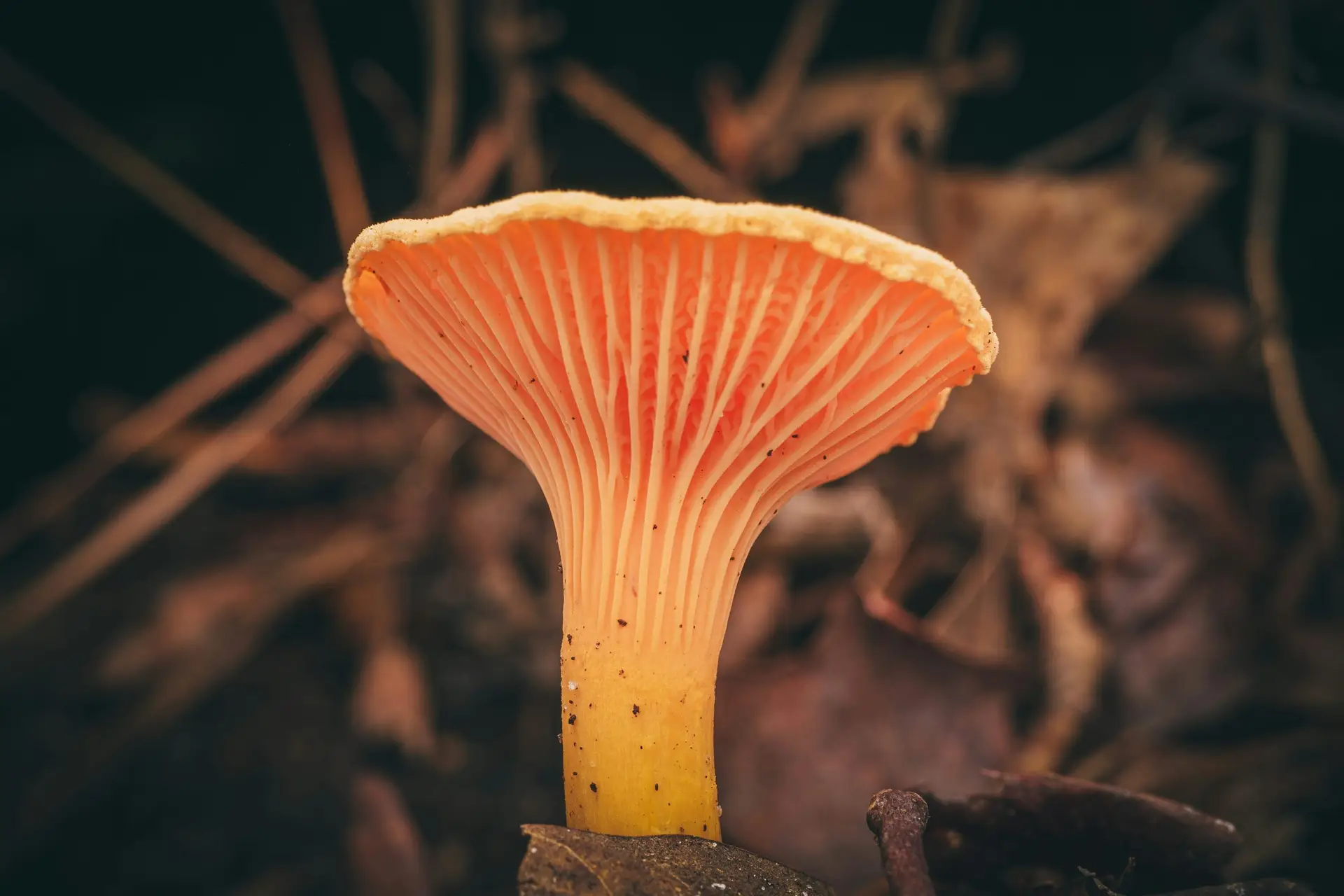
Title image: Timothy Dykes on Unsplash